CASE STUDY
OREGON DEPT OF AGRICULTURE
COLLABORATIVE DESIGN
The Challenge
The Oregon Department of Agriculture faced urgent invasive species threats—first Asian Gypsy Moth, then Japanese Beetle in the Portland Metro area – that required eradication to protect Oregon’s ecosystem and agricultural production. The challenge wasn’t just ecological; it was communicational. Without effective community engagement, court challenges could derail the eradication timeline, allowing the species to establish and cause devastating damage. Success required building public understanding and trust while moving quickly.
Approach
The Collaborative Process
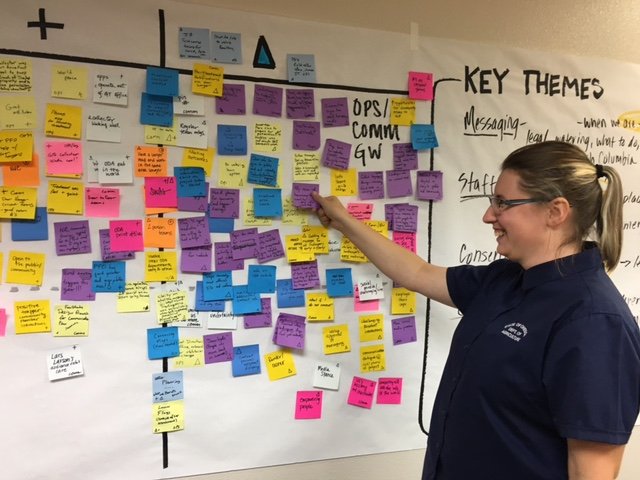
Working as a subcontractor to Samara Group, the work combined collaborative design, design thinking, journey mapping, photography, communications design, and storytelling to develop comprehensive communications and outreach strategies.
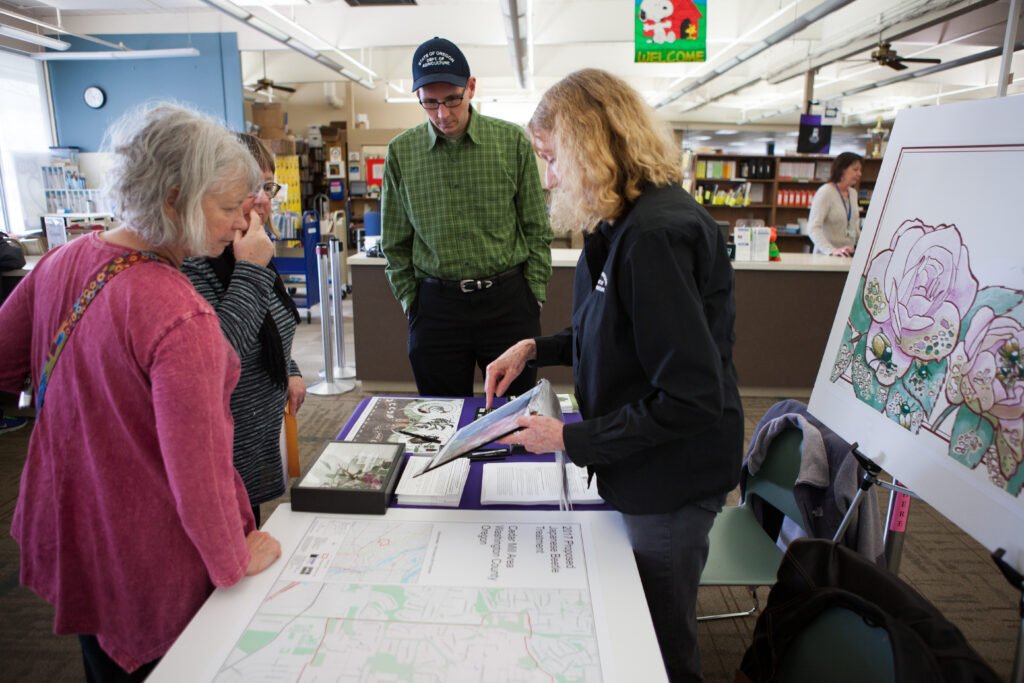
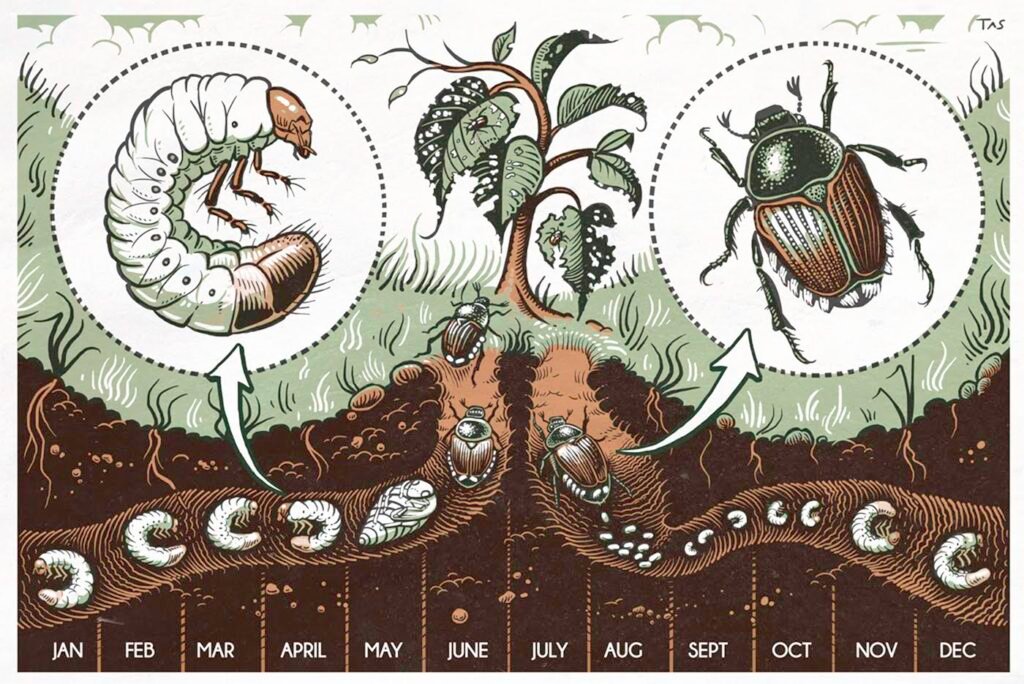
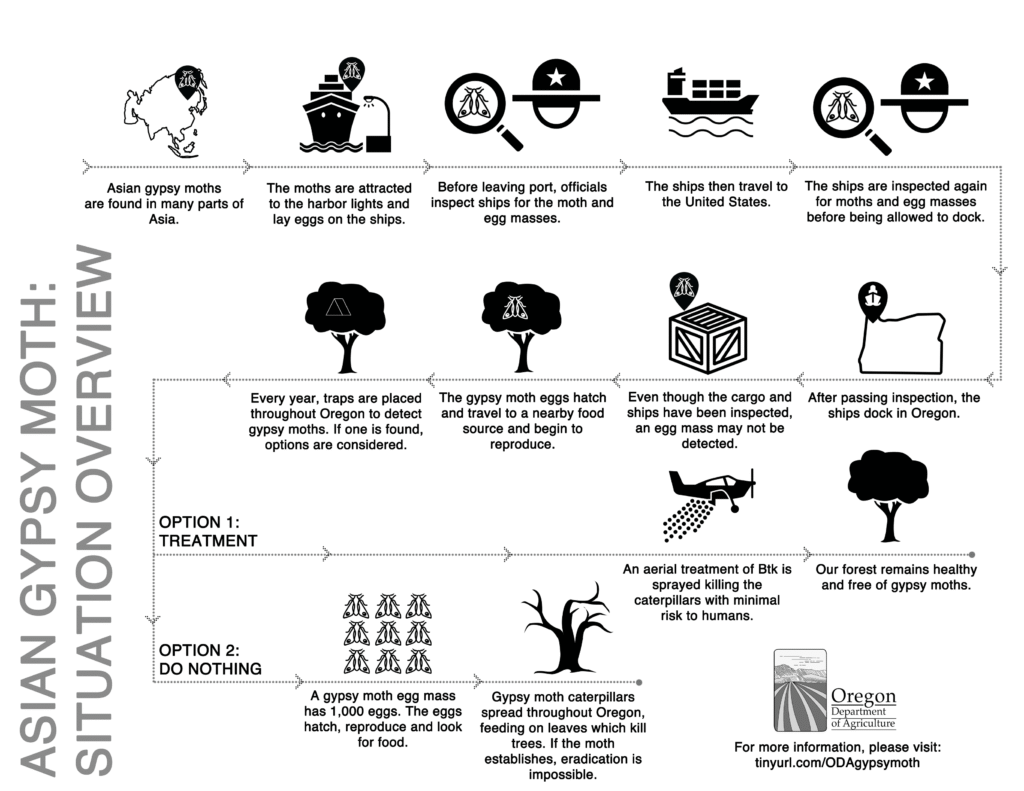
Asian Gypsy Moth Eradication: Partnered closely with ODA’s public affairs team to create accessible outreach materials, including posters developed with artists. Hosted multiple outreach events using open house methods to ensure everyone could speak and get information they needed. Created a visual journey map showing how Asian Gypsy Moth reached Oregon—making a complex ecological pathway understandable. The aerial spray program required broad community understanding and acceptance.
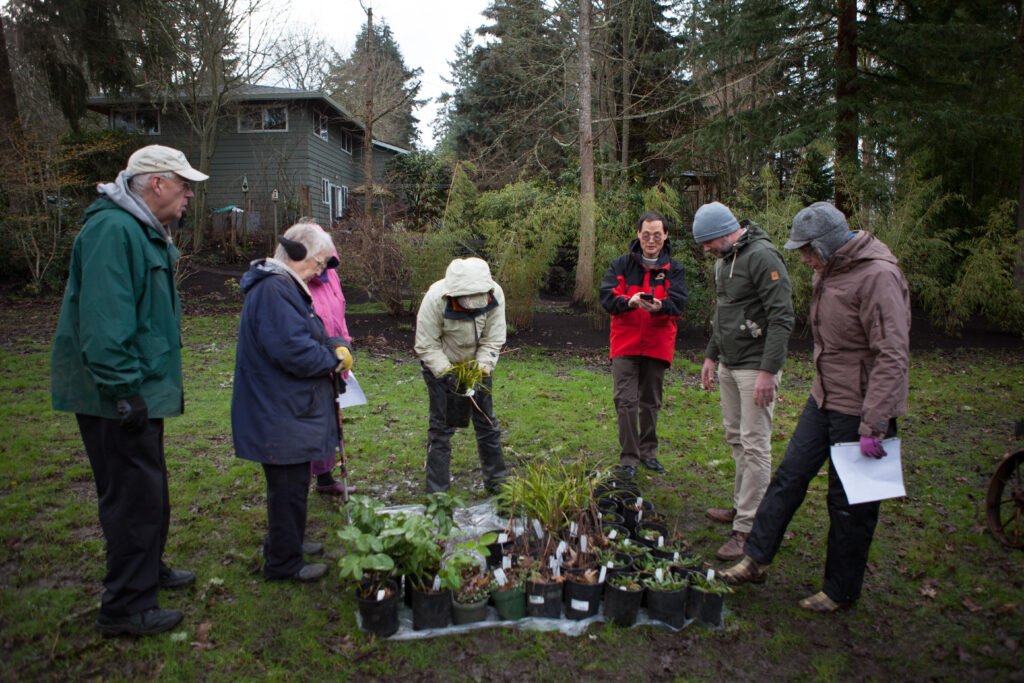
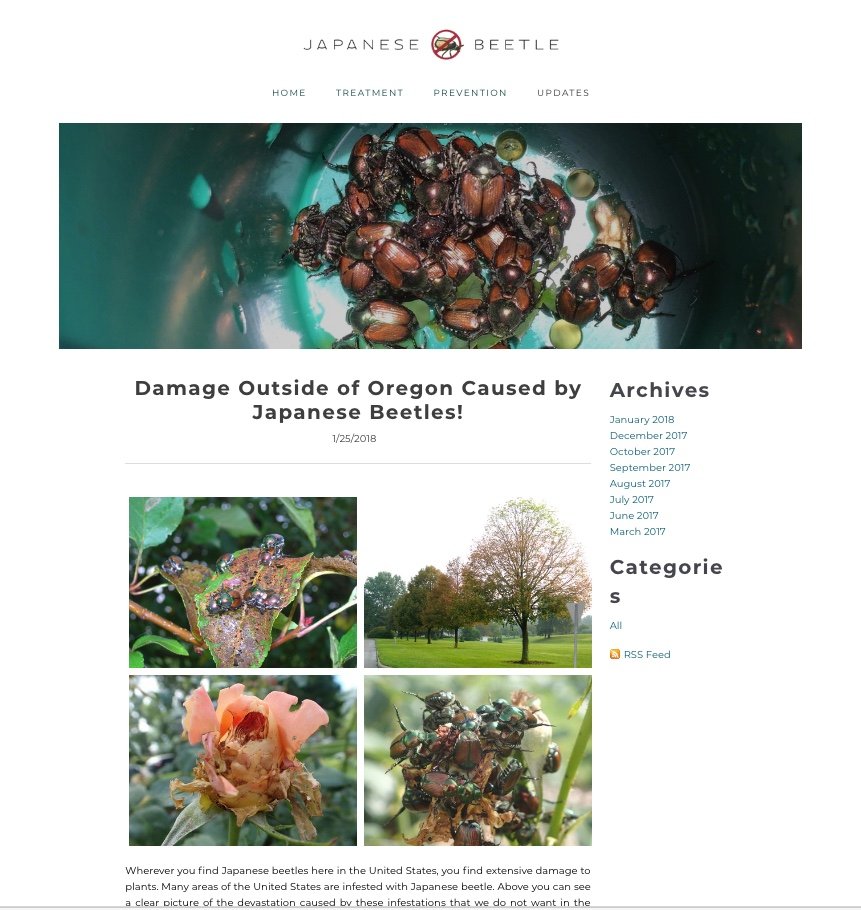
Japanese Beetle Eradication: Built on lessons from Gypsy Moth but faced a larger challenge—door-to-door communications needed because treatment required entering people’s backyards. Drafted comprehensive materials, built community partnerships, and engaged state-level agricultural representatives about potential devastating impacts to Oregon’s organic agricultural production. Developed phone scripts for staff answering resident questions. Worked with local ecologists and ecosystem managers to address concerns. Anticipated angry residents, but proactive engagement prevented escalation.
Knowledge Sharing: Created a playbook documenting the entire approach, presented at the National Insect Pest Prevention Conference so other states could learn from this successful model. The partnership continued with additional invasive species projects using journey mapping to understand entry pathways and communication challenges.
The Impact
- Zero court challenges on both projects—allowing eradication to proceed on critical timelines
- Protected Oregon’s ecosystem and agricultural production from devastating invasive species
- Received praise from ODA Director for communication effectiveness
- Successfully engaged communities that could have blocked time-sensitive eradication efforts
- Created an adaptable, flexible, and replicable model shared nationally through a published playbook and national conference presentation
Capabilities & Roles
Capabilities Utilized: Collaborative Design & Problem-Solving, Visual Facilitation & Harvesting, Strategic Illustration (journey maps), Discovery & Sense-Making
Roles Fulfilled: Communications Designer, Visual Synthesizer, Outreach Event Designer, Journey Mapper, Researcher, Writer, Web Developer, Strategic Partner (as part of Samara Group team)
Collaborative Partner: This work was done as a subcontractor to Samara Group.
“Jessica taught me how to reframe communication challenges by looking at them from different perspectives. Not a small feat… she also coached me to look at communication challenges related to management from a different perspective. The various processes were enjoyable and I learned a new way of approaching these types of projects. Also, we had good teamwork and synergetic interactions that resulted in some novel creative products (eradication playbook).”
– Clint Burfitt, IPPM Program Manager