CASE STUDY
HEARTWOOD COMMONS
FACILITATION
The Challenge
When Washington County converted the former Aloha Inn & Suites hotel into permanent supportive housing, the building was already occupied. Residents were living there as the county completed its transition from bridge shelter to permanent housing and the building still needed a name.
County staff wanted something beyond the typical community meeting format. Housing Development Manager Andrew Crampton reached out to local artist Laura Weiler, who had previously created large-scale collage murals for The Viewfinder, another Metro affordable housing development in nearby Tigard. This time the ask was bigger: a participatory process that would engage the Aloha community in naming the new building.
Laura recognized that facilitation was outside her expertise and brought in Deep Currents Studio to co-design and co-facilitate the engagement, pairing her deep artistic practice with structured participatory facilitation.
Approach
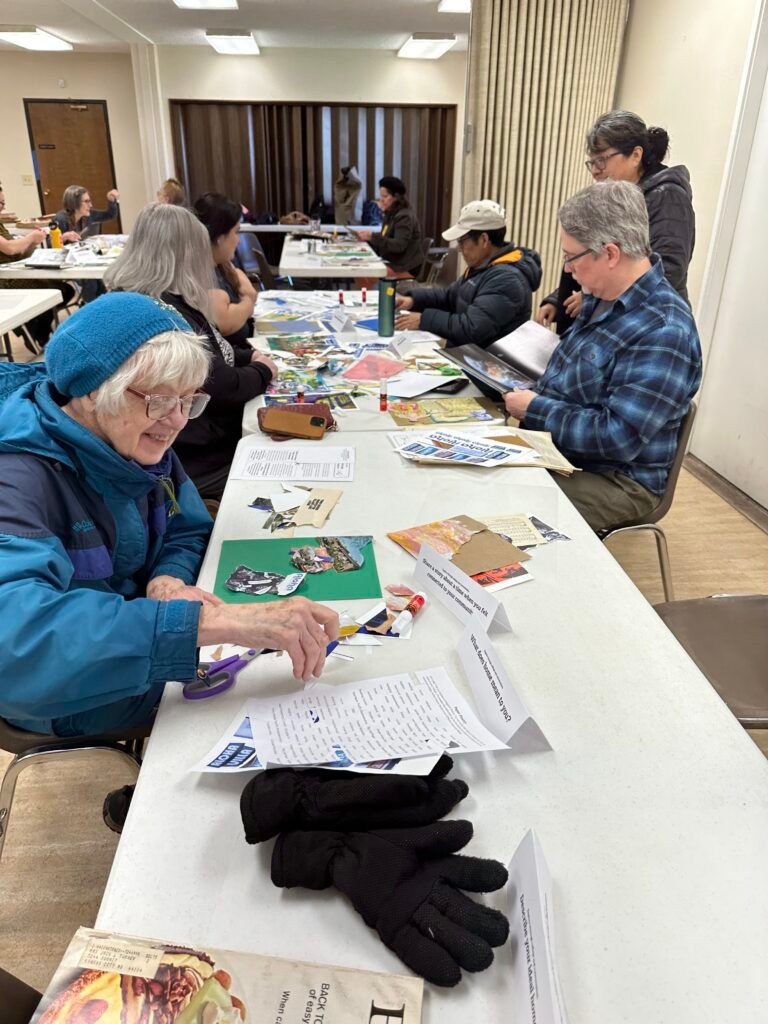
Working as an artist-facilitator team, Laura and Jess spent several weeks sourcing imagery and ephemera hyper-local to Aloha before the event. This allowed the participants to make work sourced from their own neighborhood. At the collage event, participants explored what home and community meant to them through their artwork while Laura, Andrew, and Jess moved through the room in conversation, listening to stories about living in Aloha and what it meant to have this building becoming a permanent home. Roughly 15 names emerged from that process.
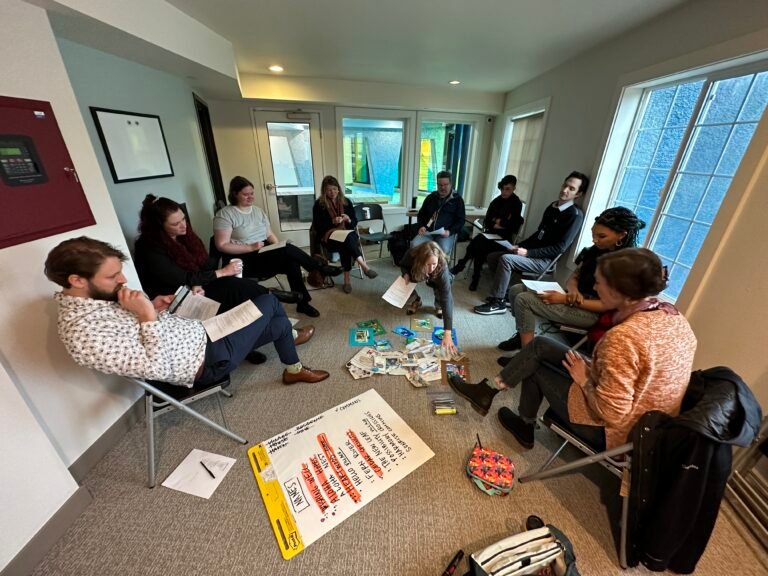
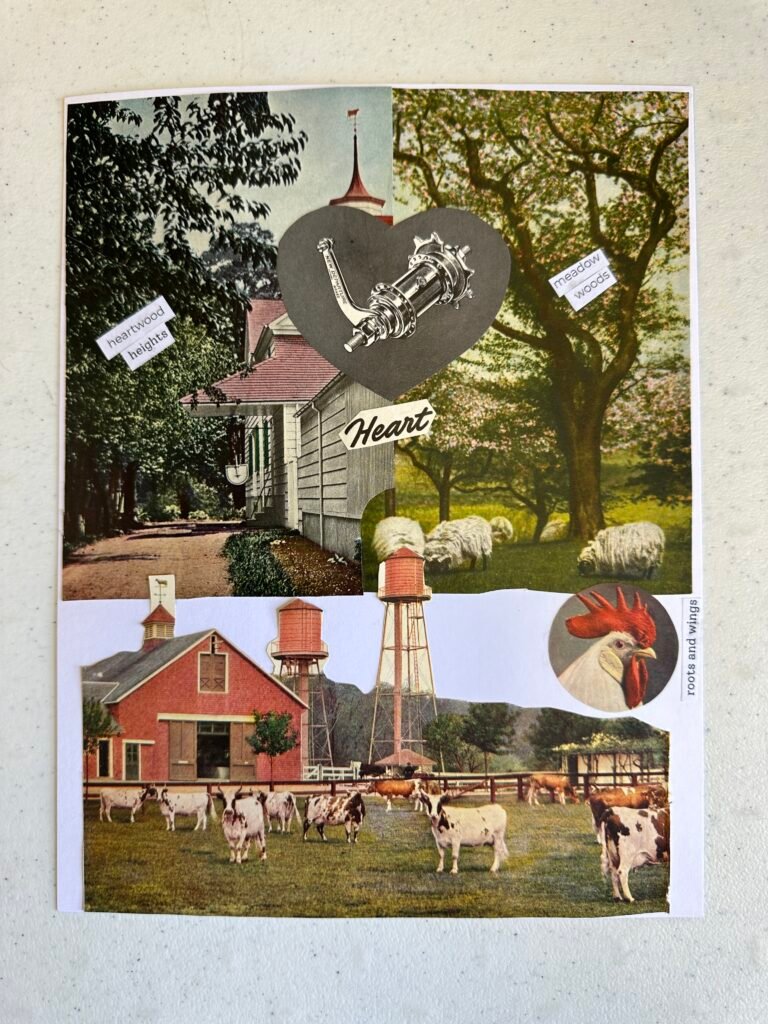
In a second session with county staff and stakeholders, the group worked through each name until they unanimously landed on Heartwood Commons, a name that had emerged from Cherie Savoie’s collage, representing strength, resilience, and housing that belongs to everyone.
The Impact
Capabilities & Roles
- The name, Heartwood Commons, is grounded in community authorship.
- The project contributed to building understanding and community around affordable housing.
- The process helped facilitate conversation between the Housing Authority and the community in a creative way.
- Participant collage artwork was archived for potential future display at the building, connecting residents to the story behind their home’s name.
- The project explored how government entities can involve local artists not as hired contractors filling an assignment, but as co-creators/facilitators using art as information and as a pathway for conversation.
Capabilities Utilized: Visual Facilitation, Collaborative Design & Problem Solving, Discovery and Sensemaking
Roles Fulfilled: Facilitator, Collage Artist, Researcher
References
Washington County Housing Services E-Newsletter (April 27, 2023):
Metro Story Map (2023):
https://storymaps.arcgis.com/stories/4da22d7c167c4d2886ee1e1cece8cbfe
Washington County Press Release (April 19, 2023):
Metro News Release:
https://www.oregonmetro.gov/news/heartwood-commons-brings-new-affordable-homes-aloha
“Jess brought the facilitation structure that let the community’s own voice come through. We weren’t hired artists filling an assignment — we were using the art as the information, asking what the community’s own making was telling us. This felt like a genuinely new way of working — and Jess made it possible. Jess knew how to facilitate and synthesize responses to the created artworks with the decision making group, moving them to genuine consensus. That’s the piece I couldn’t have done alone. What makes Jess rare is that she can be firm and kind at the same time — she humanizes the whole process in a way that I don’t think other people are able to do.”
— Laura Weiler, Cut & Placed LLC